The deadly attack on US forces in Palmyra last week underscores several troubling trends within the post-Assad security apparatus that could threaten nascent cooperation with US-led International Coalition partners. The potential for extremism among new army recruits, combined with the influx of hardline elements, has already raised alarms among allies. The attack by a security forces member also raises serious questions about breaches by radical elements within the reconstituted Syrian forces.
Extremist Developments
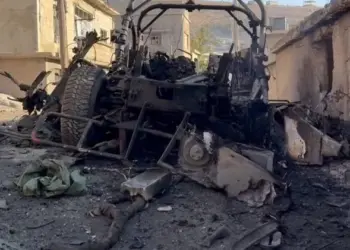
On 13th December, a suspected ISIS-affiliated ambush near the historic city of Palmyra claimed the lives of two US soldiers and one American civilian interpreter, while wounding three other US troops. The assault was carried out by a lone gunman, believed to be affiliated with ISIS. The attack represents the deadliest strike on US forces in Syria by the extremist group since 2019, the year ISIS lost its last geographic foothold along the Euphrates River in south-east Deir Ezzor province. The chosen site of this attack—Palmyra—holds enormous strategic and symbolic importance for extremist cells: as a central point hosting crucial urban infrastructure in the sparsely populated Badia desert, Palmyra is the most important site in an area where ISIS has continued to maintain significant influence and operational capacity longer than anywhere else in the region.
The attacker was reportedly enlisted with Internal Security, raising major concerns about the infiltration of extremist elements into the post-Assad armed forces and security apparatus in Syria. While the extent of the attacker’s connections to the organizational network of ISIS are still being investigated, the presence of radicalized Islamists within trusted state security units raises larger questions of the reliability and trustworthiness of these forces as the interim government has come under increasing pressure, internally and externally, to militarily confront ISIS cells operating across Syrian territory.
For al-Shara’a, the situation necessitates a delicate balancing act that is increasingly difficult to maintain, as Syria has courted US support to remove sanctions and welcome the country out of diplomatic isolation—largely in exchange for joining the anti-ISIS coalition and providing intelligence on extremists to western partners. This growing cooperation has drawn muted anger from some corners of his government and society. The approach has also sharpened the focus of ISIS cells against Damascus, with a rising frequency of attacks against Syrian security forces, including a major ISIS attack in Idlib over last weekend that claimed the lives of four soldiers.
Despite potential friction with hardline supporters, interim officials have significantly stepped-up cooperation with US-led International Coalition partners in recent months. Al-Shara’a met with senior US officials during his high-profile visit to Washington DC last month, which reaffirmed mutual interests in degrading extremist networks and eradicating ISIS remnants, and set the stage for the Syrian government to formally join the International Coalition. In response to the recent incidents, US CENTCOM reaffirmed its cooperation with Syrian authorities to root out ISIS remnants in the country. On the 19th, US CENTCOM and partner forces carried out a series of airstrikes targeting ISIS positions in north-east Syria. Operation Hawkeye Strike reportedly hit more than 70 targets.