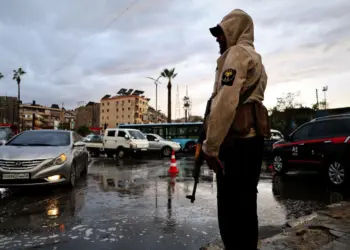
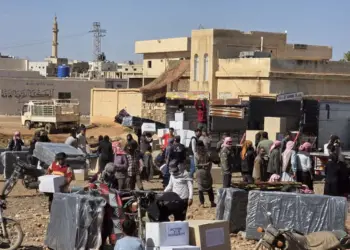
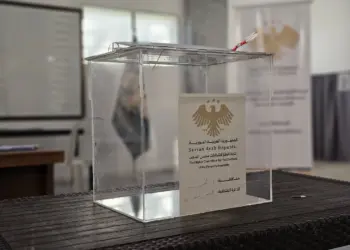
One year into Syria’s political transition, this second round of ETANA’s public opinion survey reveals a transition that remains fragile and unevenly legitimised. Perceptions of safety, freedoms, women’s rights, services and economic management continue to divide sharply along regional, sectarian and educational lines. Satisfaction is concentrated mainly in governorates with large Sunni populations, such as Idlib, Homs, Aleppo and Quneitra, and among respondents with less than secondary education. Meanwhile, Suwayda, Tartous and Hasakeh show consistently low confidence across most indicators. Findings from the Damascus sample also indicate low satisfaction, although these should be interpreted cautiously given sampling limitations. Across the country, trust in state institutions administered by interim authorities remains weak, and cautious optimism about the transition’s direction is common.
At the political level, the survey shows that input legitimacy is anchored more in the person of President Al-Sharaa than in the institutions meant to carry the transition forward. Trust in transparency, in the government’s decision-making processes, and representation, including by the new parliament, is limited and highly uneven. Approval of Al-Sharaa’s performance is significantly higher. The comparison with the first survey round conducted 6 months into the transition indicates broad national stability in trends, with slight improvements in safety and freedoms and modest declines in optimism about the direction of the country’s transition and perceptions of its economic performance. Taken together, the results suggest a transition still reliant on identity-based input legitimacy rather than output legitimacy that is subject to institutional performance, with clear “winner” and “loser” regions and communities. This poses risks for future stability unless the authorities prioritise inclusion, transparency and fair distribution of political and economic benefits, and unless international engagement uses these legitimacy gaps to widen political space rather than entrench new forms of exclusion. The map of polarisation indicates that power and resources need to move closer to communities that currently feel excluded, while also binding them into a national framework so that today’s local orders do not harden into tomorrow’s conflict frontlines.
Conducted one year into the transition, this second survey builds on the baseline Public Opinion in Transitional Syria (10 June 2025), undertaken by ETANA six months into the transition.
Summary: Key findings
- The transition remains fragile and unevenly legitimised: One year into the transition, public confidence in the authorities is highly uneven across regions, identities and socioeconomic groups, with trust narrowly concentrated in a limited set of governorates and social groups rather than being widely shared across regions, sects, and education levels.
- Clear regional divides persist: Governorates such as Idlib, Homs, Aleppo and Quneitra report relatively positive perceptions across most indicators, while Suwayda, Tartous and Hasakeh show consistently low confidence.
- Identity and education strongly shape perceptions: Sunni respondents and those with less than secondary education or below consistently report higher satisfaction across both output and input legitimacy indicators, while other religious communities and university or further-educated respondents express markedly more critical views.
- Institutional trust remains weak despite some service improvements: While improvements in services and, to a lesser extent, safety are acknowledged in several governorates, these gains have not translated into confidence in transparency, representation, parliament or social cohesion at the national level.
- Leadership outperforms institutions: Ahmad Al-Sharaa enjoys significantly higher approval than the government, parliament, and decision-making processes, indicating that input legitimacy remains personalised rather than institutionalised.
- Optimism is cautious and uneven: Around half of respondents express optimism about the country’s direction, but high levels of neutrality and pessimism in several regions and communities point to hesitation rather than consolidated support.
- Trends are broadly stable nationally: While national patterns show only modest change since May 2025, governorate-level analysis reveals sharp shifts in some areas, particularly Suwayda.
One year into Syria’s political transition, the central question is how far the new authorities are viewed as delivering greater security, fairness and inclusion for Syrians themselves. This period remains marked by insecurity, external influence, economic strain and deep social fragmentation, all of which shape how legitimacy is formed and experienced.
This report presents the second round of ETANA’s public opinion survey, undertaken between 11 and 20 November 2025, six months after the baseline. The survey tracks how perceptions of the transitional authorities are evolving and examines two dimensions of legitimacy. Output legitimacy concerns what the authorities deliver in terms of security, services, rights, livelihoods and social cohesion. Input legitimacy concerns how decisions are made and whether people feel included, represented and able to influence political processes.
The survey does not offer a definitive verdict, but rather a structured snapshot of how perceptions vary across regions, identities and socioeconomic groups. It highlights where expectations are being met, where they are not, and where views remain uncertain or ambivalent.
The sections that follow outline the methodology and limitations, present findings on output and input legitimacy, compare results with the first round in May 2025, and draw implications for the transition and for international engagement.
Methodology & Limitations
This second round of the Syria opinion survey was conducted between 11 and 20 November 2025, six months after the baseline, to capture evolving perceptions of the transitional authorities one year into the transition. As with the baseline, data collection took place in a fluid and fragile environment affected by insecurity, external intervention, economic hardship, trauma and mistrust. Results, particularly on safety, representation and optimism, should therefore be read with careful attention to this wider political, economic and psychological context.
The survey used a structured, closed-ended 12-question instrument administered mainly face to face, with phone interviews used where access was limited. A trusted, gender-balanced network of local researchers conducted the work, selected for their embeddedness in their own communities and broad representativeness across Syria’s ethnic, sectarian and geographic diversity. They follow strict confidentiality and protection protocols and provide detailed contextual notes at the pilot stage and after fieldwork, which informed methodological refinements in this second round. The sample is representative at the governorate level and comprises 1,515 respondents, exceeding the minimum required for a 95% confidence level and 3% margin of error. However, representation at district and neighbourhood levels, particularly in Damascus, could not be fully ensured, and results for the capital should therefore be interpreted with particular caution. Due to operational constraints, the survey does not capture displacement, disability or urban–rural status, limiting the scope of analysis. A refusal rate of just under 5% reflected concerns about surveillance or reprisal and may have influenced muted criticism among those who did participate.
Following feedback from the baseline, a “somewhat” response option was added to most questions in this round. While this improved accuracy, it limits direct comparability with several baseline indicators. Unless otherwise specified, reported satisfaction figures refer to respondents who selected “yes” (full satisfaction). Respondents who selected “somewhat” are not included in these figures and are treated as expressing partial or uncertain satisfaction. This distinction is important, as a sizeable share of respondents opted for “somewhat” across multiple questions, reflecting hesitation or ambivalence rather than clear approval or rejection. Where relevant, this report highlights the prevalence of such uncertainty in the analysis.
Brief Methodology
- Sample size: 1,515 respondents (52.3% female, 47.7% male)
- Timing: Conducted between 11 and 20 November 2025, six months after the baseline survey
- Geographic spread: Coverage across all Syrian governorates, with the sample designed to be representative at the governorate level
- Sampling approach: Stratified sampling guided by gender, age and education, implemented by local field researchers; district-level targets were used as indicative guidance rather than quotas.
- Data collection: Primarily face-to-face interviews, supplemented by phone interviews where access was constrained; structured, closed-ended 12-question survey
- Enumerators: A trusted, gender-balanced network of locally embedded researchers from diverse religious, sectarian and ethnic backgrounds, many with university training and experience in sensitive data collection.
Key Findings & Analytical Considerations
The survey is divided into two sections:
- Output legitimacy refers to what the authorities deliver: whether people experience improvements in security, services, rights, livelihoods and social cohesion.
- Input legitimacy refers to how decisions are made: whether people feel included, represented and able to influence political processes.
Key Findings
Regional polarisation is stark, with governorates like Idlib, Homs, Aleppo and Quneitra reporting broadly positive perceptions, while Suwayda, Tartous and Hasakeh, and to an extent Damascus, exhibit low satisfaction and deep distrust across many indicators. Findings for Damascus should, however, be read in light of the sampling caveats noted above.
Sectarian and ethnic polarisation: This geographical pattern reflects identity-based fault lines. Governorates reporting more positive evaluations are largely those where Sunni communities form a clear majority, while those with low satisfaction tend to have higher concentrations of Druze, Alawite and Christian communities. Differences between Arab and non-Arab populations are generally less pronounced, not least because predominantly Arab governorates themselves contain significant religious diversity. Damascus stands out as an apparent exception: despite its large Sunni population, the current sample records relatively low satisfaction across a number of indicators, although these results are subject to the sampling limitations already mentioned.
Socioeconomic factors strongly shape public expectations. Respondents with less than secondary education consistently report higher satisfaction across indicators such as freedom, safety, women’s rights, economic management, and services. This suggests that they may hold more modest expectations, prioritise immediate stability, or be more influenced by identity-based political dynamics, whereas university-educated respondents apply higher governance standards and are therefore more critical.
Age patterns reinforce this divide: Middle-aged groups (46–60) express the highest satisfaction, whereas older respondents (60+) are markedly more pessimistic, especially on cohesion and governance.
Systemic legitimacy challenges persist across the political sphere, with indicators such as transparency, representation, and social cohesion remaining relatively weak at the national level despite improvements in services in some governorates.
Optimism: While optimism exists, particularly in areas where service delivery has improved, these gains have not translated into broader institutional trust. The findings show that Syrians may acknowledge functional improvements, but they still doubt the representation, inclusiveness, and transparency of the emerging governance system.
Output Legitimacy
Under output legitimacy (what the authorities deliver: whether people experience improvements in security, services, rights, livelihoods and social cohesion), there are two categories:
- Safety, rights, and social cohesion, and
- Economic conditions and service delivery.
Safety, Rights, and Social Cohesion (Q1, 2, 5, 11)
This category includes four indicators, namely: safety, freedom, women’s rights, and social cohesion. Overall, demographic patterns show that positive perceptions of these indicators are concentrated among respondents living in Idlib, Homs, Aleppo and Quneitra, the Sunni community, respondents educated only to primary level or below, and middle-aged groups. Meanwhile, negative perceptions are concentrated amongst respondents residing in Suwayda and arguably Damascus (considering sampling limitations), and to an extent in Tartous (except for safety) and Raqqa (mainly freedoms and safety), as well as amongst the Druze and the Alawites. This fragmentation highlights enduring regional inequalities and identity-based divides and marginalisation, along with social mistrust and disconnection between communities that are increasingly confined to their echo chambers. The transitional authorities need to address this by reducing inequality and building broad-based trust across Syria’s social fabric. This starts with a serious transitional justice process that extends to violations committed during the transitional phase.
As importantly, relevant findings suggest the dominance of several trends, including:
Trend 1: A deeply divided society across region, religion and sect
The findings point to a deeply divided society, with deep and persistent disparities of perception of rights and freedoms across regions, religion, sect and possibly even class.
Across Governorates
At the governorate level, perceptions of safety and freedoms diverge sharply, forming two distinct clusters. The first cluster, with governorates such as Idlib, Aleppo, Homs, and Quneitra, reports high levels of satisfaction. This ranges from 77% (Aleppo and Quneitra) to 83% (Homs and Aleppo) in terms of safety, and from 66% (Aleppo) to 91% (Quneitra) in terms of freedoms. The second cluster, Suwayda, Tartous, Raqqa, and Damascus, shows strong dissatisfaction. None in Al-Suwayda feel entirely safe, followed by only 21% in Damascus, though this finding should be interpreted with care given district-level sampling limitations. On this basis, Damascus also shows very low reported satisfaction (13%) regarding freedoms, just above Suwayda (6%).
While the July massacres explain Suwayda’s case, the Damascus result could reflect sampling bias at the district level, in which non-Sunni groups and upper-class Sunnis who share these views may be overrepresented. It could also relate to comparisons with pre-transition relative stability in Damascus and to attacks on personal freedoms. In this sample, Damascus appears to show low satisfaction across several indicators (4%–13%), although the sampling constraints already noted limit the strength of inferences that can be drawn. Even with roughly a quarter of the Damascus respondents feeling neutral, the data suggest that more religious, educated and upper-class segments in the capital may be particularly unlikely to legitimise the new authority.
Similar patterns appear in views on women’s rights. A majority see that women’s rights are protected in Idlib (74%), Homs (73%), and Daraa (61%). On the other hand, none share that view in Suwayda, and hardly 8-9% feel so in Damascus and Tartous, with those unsure standing at 13% and 20%, respectively. This is likely because the first groups tend to adopt an understanding of what women’s rights comprise that differs from that of the latter groups, which may understand them more closely in line with the Universal Declaration of Human Rights.
Regarding coexistence and social cohesion, national-level findings show that 42% of respondents believe social cohesion has worsened over the past year, compared with 35% who believe it has improved and 23% who think it is unchanged. Regional breakdowns reinforce this pessimism: in the Damascus sample, 84% of respondents believe cohesion has deteriorated (a percentage that should be treated with caution as noted above); in Tartous, 83%; and in Suwayda, 94%, the highest in the country. Even in governorates such as Hama and Rural Damascus that show positive perceptions of freedom and safety, respectively 63% and 68% believe that social cohesion has declined. While these results point to limited success by the current authorities in building trust at the national level, the fact that only 9% in Quneitra, 10% in Homs, 11% in Idlib and 15% in Aleppo believe social cohesion has deteriorated underscores how uneven and fragmented perceptions and lived experiences of cohesion remain across Syria.
Across Sects and Ethnicities
The sectarian divide is sharp. The Sunni community consistently reports the highest levels of full satisfaction across all four indicators (62% freedom, 66% safety, 55% women’s rights, and 45% social cohesion), while other religious components exhibit significantly lower confidence in these indicators. For example, around two-thirds of Sunnis report feeling safe and satisfied with their freedoms. By contrast, only 8% of Druze feel fully secure, and just 3% are fully satisfied with their freedoms, while among the Alawites, only 9% are fully satisfied with their freedoms and 17% feel safe.
In terms of women’s rights, 82% of Sunnis report being fully or somewhat satisfied, compared with 24% of Alawites, 20% of Druze, and none of those who identify as atheist or non-religious.
Regarding social cohesion, while under half of the Sunnis (45%) see that the level of cohesion has improved, none of the Druze share that view. Indeed, over 90% of the Druze, Alawites, and non-religious communities consider it to have worsened. That number drops to 27% amongst Sunni communities, with 28% suggesting it stayed the same.
Arab-Kurdish ethnic differences in perception exist, though these are not strongly polarised. Kurdish and Arab respondents report similar full satisfaction with freedoms (49–51%), yet Kurds feel notably safer where they live (63%) while expressing roughly a 10-point lower satisfaction rate with women’s rights (35%) under the Damascus authorities and social cohesion (28%). Other ethnic groups, including Turkmen, Assyrians and Circassians, show comparatively lower satisfaction with freedom, safety and women’s rights. However, their reported level of satisfaction with social cohesion is not the lowest; it sits slightly above that of Kurdish respondents and closer to the Arab average.
Trend 2: A relative sense of uncertainty
At the national level, the findings show that around a quarter of respondents refrain from giving assertive answers (“yes” or “no”), instead opting for neutral responses as “somewhat” or “unsure”. This pattern reflects broader uncertainty and hesitation among a notable share of the population. When examined more closely, certain regions and social groups display particularly high levels of uncertainty, likely reflecting their specific local contexts and positionality, and potentially indicating scope for greater awareness and engagement around rights and freedoms.
Regionally, uncertainty is particularly pronounced in Rural Damascus, where 48% of respondents express ambivalence about safety, 34% about liberties, and 39% about women’s rights. Hama shows a similar pattern on liberties (31%) and women’s rights (38%). At the sect-level, the Christian and Ismaili communities are amongst the most uncertain, particularly when it comes to their safety (respectively 46% and 54%) and freedoms (34% and 41%). While several factors may underpin this hesitation, it may signal a more nuanced stance, shaped by complex local security dynamics and uncertainty over the authorities’ approach to rights and freedoms. Crucially, this suggests room for attitudes toward the latter to shift, chiefly if targeted efforts are made to raise awareness there.
Trend 3: Structured divides across age, gender, education, sect and ethnicity
Across demographic groups, perceptions of freedom, safety, women’s rights and social cohesion follow clear and recurring patterns shaped by age, gender, education, sect and ethnicity.
Age effects show modest differences across groups: middle-aged (age 46–60) tend to be the relatively most fully satisfied (freedom at 55%, safety at 62%, women’s rights at 48%); the older 60+ group tend to be roughly the least satisfied (freedom at 35%, women’s rights at 46%); and the younger adults (18–30) display slightly more neutrality than other groups signalling greater uncertainty rather than clear support or dissatisfaction.
Gender differences are limited: men report marginally higher satisfaction with freedom (51% vs. 49%) and safety (56% vs. 53%). More importantly, women are more pessimistic about the authority’s protection and support for women’s rights (only 38% satisfied vs. 48% among men), but more optimistic about social cohesion (34% of women said it improved, compared with 36% of men). These gender gaps, although sometimes mild, except in respect to women’s rights, point to differentiated gendered lived experiences and perceptions in the transitional environment.
Educational variation is more evident. Levels of satisfaction regarding rights and freedoms decreased with educational attainment. Respondents with primary education or lower are more fully satisfied with freedoms (63%), safety (69%), and women’s rights (59%). Meanwhile, those with university and more advanced educational levels express notably more critical views; only 36% believe women’s rights are fully protected and just 28% see improvements in social cohesion.
Figure 8: Satisfaction Rates (%) by Educational Level: Freedom, Safety, Women’s Rights, and Social Cohesion
Economic Conditions and Service Delivery
This category includes two additional indicators of output legitimacy, namely: personal economic conditions, economic management, and service provision. They display trends consistent with the previous category.
Trend 1: A deeply divided society and state across regions and sects
Governorate-level contrasts in perceptions of changes in personal economic conditions and the national economic management (economic governance at the national level) are sharp. A large majority in Quneitra (86% and 89%), and around half of respondents in Idlib (52% and 55%), Homs (48% and 63%), and Lattakia (54% and 57%), report that their personal finances and the national economy have improved. By contrast, deterioration is reported by respondents in Suwayda (76% and 91%), Raqqa (52% and 71%), and Damascus (59% and 64% (up from 33% and 57% six months earlier in the current sample). Critically, these findings show a strong positive association between micro and macro perceptions, both of which display stark regional divides and inequalities. Given the sampling limitations already noted for Damascus, however, shifts in the capital should be treated as indicative rather than definitive.
Assessments of public services, the clearest indicator of state capacity, show moderate optimism at the national level: 52% say services improved, 23% say they worsened, and 25% report no change. This optimism is concentrated in Quneitra (97% better), Lattakia (96% better), Homs (86% better), Tartous (66% better), Daraa (90% better), and Idlib (64% better), while arguably (due to sampling limitations) severe pessimism dominates in Damascus (72% worse) and parts of the northeast such as Hasakeh (48% worse).
Perceptions of economic management and services differ markedly across sectarian groups. Sunnis report the highest overall satisfaction, particularly regarding economic management (42%) and service delivery (53%). Alawites show a mixed profile, with relatively strong satisfaction with services (63%) but weaker confidence in economic management (13%). Christians and other minority sects fall in the middle range, expressing moderate satisfaction across indicators. In sharp contrast, Druze respondents show extremely low satisfaction, with only 2% expressing approval of economic conditions or management and just 25% satisfied with services. These disparities point to a deeply fragmented landscape in which sectarian identity strongly shapes trust in the authorities’ economic performance.
Ethnic differences also reveal substantial variation. Arabs display the highest satisfaction, especially with service provision (57%), while Kurds report the lowest levels across all indicators, including just 13% satisfaction with services. Those respondents from other ethnic communities, categorised as “others”, fall in between, showing moderate satisfaction with economic conditions (29%) and services (49%).
Trend 2: Education, not age or gender, structures views of economic management
Economic satisfaction varies across age, with middle-aged respondents (46–60) expressing the highest confidence in both economic conditions (35%) and management (39%), alongside strong satisfaction with services (54%). Younger adults (18–30) and those aged 31–45 display moderate satisfaction levels, while older respondents (60+) are consistently the least satisfied, particularly with services (41%).
Gender differences are modest but notable. Men report slightly higher satisfaction across all economic indicators, especially regarding service provision (57%). Women’s satisfaction is lower overall, particularly on economic conditions (27%) and services (48%).
Educational attainment shows a clear pattern: respondents with less than secondary education (preparatory level) report the highest satisfaction with both economic management (44%) and conditions (34%). Satisfaction declines with educational attainment, as those with university education express the least satisfaction in economic management, though they report relatively high satisfaction with services (54%).
Figure 13: Satisfaction Rates (%) by Education Level: Economic Conditions, Economic Management, Services
Trend 3: A relative sense of uncertainty
Nearly one in four respondents express neutrality when assessing the authorities’ economic management and service delivery. Meanwhile, 43% feel their economic situation has remained the same. This sizable neutral group underscores a sense of relative uncertainty.
Input Legitimacy
Input legitimacy for the authorities rests on whether people perceive decision making to be transparent, representative and inclusive: in other words, whether they feel included, represented and able to influence political processes. This section examines the indicators related to transparency, representation, leadership, and the overall direction of the transition.
Transparency, representation, leadership and the direction of the transition
The findings on input legitimacy depict a transition marked by uncertainty or cautious societal neutrality at one end and sharp regional, identity, and educational divides at the other. Trust in government transparency in decision-making and representation, in its parliament, and in the overall leadership and direction of the country clusters in particular regions and sects.
Region-wise, this is primarily in Idlib, Homs, and Quneitra, with Aleppo, Deir Ezzor, and Daraa scoring particularly high on leadership and perceptions of representation. Meanwhile, Suwayda, Tartous and, to a lesser extent, Hasakeh emerge as concentrated pockets of alienation, with the Damascus figures also pointing in this direction on the current sample.
Identity-wise, Sunni communities (except in Damascus) attribute the transition and its leadership much greater input legitimacy, as they feel more represented by and accepting of it than the Druze, Alawites, Ismailis and Christians. The same applies to the Arabs relative to the Kurds, albeit the differences are mild.
Education-wise, those with less than secondary education are systematically more satisfied and optimistic than university graduates, suggesting different expectations and benchmarks for judging the authorities.
Across these divides, Al-Sharaa personally enjoys higher approval than the government, its measures, and its institutions.
Trend 1: Identity, age and regional divides and divisions in political trust
In terms of representation, less than half of the respondents feel represented by the interim authorities. Neutral hesitation is relatively high (26%), highlighting limited confidence in political inclusion. However, the picture looks different when examined more closely, when the data are disaggregated by region and sect.
Satisfaction with representation is also strongly divided across region and sect. Regionally, strong approval emerges in Idlib (72%), Homs (79%), Aleppo (62%), Deir Ezzor (67%), Quneitra (60%), and to a less extent Daraa (57%), while Suwayda (91% dissatisfied), Damascus (75% dissatisfied), and Tartous (64% dissatisfied) show alarming political alienation, with the Damascus figure again subject to the sampling caveats noted.
Satisfaction with the new parliament’s inclusiveness is relatively weak, with only 38% satisfied, 28% dissatisfied, and 34% neutral. Regionally, approval clusters in Idlib (65%), Aleppo (60%), Quneitra (89%), Homs (64%), Raqqa (42%), and Daraa (32%), while Suwayda (94% dissatisfied), Tartous (55% dissatisfied), Damascus (58% dissatisfied), and Hasakeh (51% dissatisfied) report dissatisfaction.
Perceptions of transparency are mixed across the country, with 34% dissatisfied, 39% satisfied, and 28% neutral, but governorate-level variation is extreme. High satisfaction is concentrated in Idlib (71%), Homs (68%), Quneitra (60%), as well as in Aleppo (43%), and Daraa (53%) to an extent. In contrast, distrust is concentrated in Suwayda (91%), Tartous (77%), Damascus (71%), and to a lower level in Hasakeh (55%), with the Damascus result again requiring cautious interpretation.
In terms of sects, Sunnis express by far the highest satisfaction across the three indicators, with 50% satisfied with the transparency and parliament, and 60% with the representation indicators. Christians hold moderate levels of satisfaction across all three indicators (almost 25% each). In contrast, Alawite and Druze respondents show extremely low satisfaction, with single-digit levels of satisfaction in transparency and representation, and near-zero confidence in parliament.
Arabs report the highest satisfaction across all three indicators, especially representation (49%). Kurds show substantially lower satisfaction, though their evaluations of parliament (35%) are somewhat higher than their views on transparency or representation. Respondents from other ethnic groups consistently express the lowest levels of satisfaction.
Trend 2: Leadership fares better than institutions
Satisfaction with Al-Sharaa’s performance shows acceptable national approval, with 53% satisfied and only 20% dissatisfied, suggesting a good level of public confidence in the authorities’ leadership. Positive assessments are high in Idlib (85%), Homs (86%), Daraa (88%), Aleppo (66%), Quneitra (77%), and Deir Ezzor (69%), whereas Suwayda (85% dissatisfied), Damascus (69% dissatisfied), Tartous (47% dissatisfied), and Hasakeh (49% dissatisfied) represent high areas of rejection.
In terms of education, satisfaction reaches 70% among those with less than secondary education, 56% for secondary-level respondents, and drops to 45% among university graduates. Sectarian responses reveal similar patterns: Sunnis (67% satisfied) show strong support, the Shia (50%) show medium support, and Christians are on the fence, with 35% supporting and 35% undecided. Meanwhile, dissatisfaction is highest amongst the Druze (78%) and Alawites (42%).
Ethnically, Arabs (56% satisfied) are more optimistic than Kurds (34%), indicating differential trust in the leadership of Damascus authorities. Across age groups, satisfaction peaks among the 46–60 cohorts (56%) and declines among the 60+ (41%). Gender gaps remain narrow.
Trend 3: Cautious optimism about the country’s direction
Optimism about the country’s direction stands at 51% nationally, but neutrality is also high (28%), indicating cautious hope rather than firm conviction. Regionally, optimism concentrates in Idlib (80%), Homs (84%), Aleppo (60%), Quneitra (71%), Deir Ezzor (77%), and Daraa (65%). Meanwhile, Suwayda (70% pessimistic), Damascus (64%), Tartous (42%), and Hasakeh (55%) express low confidence in the country’s trajectory.
Age again shapes optimism: younger and middle-aged groups are more hopeful than the elderly (44%). Women are slightly more optimistic than men. Education shows that optimism is 64% among those with less than secondary education, declining to 43% among university graduates. Sectarian trends mirror broader political divides—Sunnis (63% optimistic) stand apart from Druze (68% pessimistic), Alawites (40% pessimistic), and Christians (31% pessimistic/neutral). Ethnically, Arabs (53% optimistic) form the most positive bloc, while Kurds (36%) express significantly lower optimism.
Trend 4: education, not age or gender, structures views of inclusion
Satisfaction with transparency, representation, and parliament shows clear variation across age groups. Middle-aged respondents (46–60) report the highest satisfaction overall, particularly with representation (49%) and parliament (41%). Younger adults (18–30) and those aged 31–45 display similar, moderately positive levels of satisfaction across all three indicators. In contrast, older respondents (60+) show the lowest satisfaction, with notable declines in transparency (31%), representation (35%), and parliament (29%).
Gender differences are modest. Men and women report nearly identical levels of satisfaction across transparency, representation, and parliament indicators, with women scoring slightly higher on the transparency (40% compared with 38%) and men marginally higher on the representation indicator (47% compared with 46%).
Satisfaction with transparency, representation, and parliament declines markedly as educational attainment increases. Respondents with preparatory education or below report the highest satisfaction across all three indicators, including 65% for representation and 56% for parliament. Those with secondary or institute-level education show more moderate satisfaction levels, while respondents with university education and above express the lowest satisfaction, with only 33% satisfied with transparency and just 31% with parliament.
Figure 19: Satisfaction Rates (%) by Education: Transparency, Representation, Parliament
What has changed in the last 6 months? Comparison with the first round (May 2025)
National trends stable with cautious reading of Damascus shifts
Although most questions cannot be compared directly due to different scales (2-point vs. 3-point), approximate trends can still be estimated by comparing changes in the comparable response categories. At the national level, no major changes emerge: indicators such as safety, freedom, and satisfaction with steps taken by Al-Sharaa show slight improvements, while economic management, optimism, and women’s rights show slight declines. An apparent drop in satisfaction in the Damascus sample is observed, though caution is needed in interpreting trends given sampling limitations and the shift from a 2-point to a 3-point scale. In terms of demographic trends, the 46–60 age group shows a noticeable increase in satisfaction across many indicators. Meanwhile, patterns by education and sect remain largely unchanged: respondents with higher education levels and those belonging to minority sects continue to display much lower satisfaction compared with other groups.
Slight economic improvements, but widening regional disparities
Only the question of personal economic conditions can be accurately compared with the previous survey, as the same scale (3 points) was used. The perceptions of personal economic conditions show a modest but notable shift between the two surveys. Nationally, the share of respondents reporting improvement increased from 23% in survey 1 to 30% in survey 2, while those reporting worsening conditions declined slightly from 31% to 28%, indicating a mild positive trend. However, the stability (the same) category remains high in both surveys (46% and 43%), suggesting that for many, economic conditions have not changed materially. At the governorate level, the contrast is sharper. Areas such as Quneitra, Lattakia, Idlib, Homs, and Deir Ezzor show substantial increases in the “better” category, signalling perceived improvements in local economic conditions. Conversely, Damascus, Raqqa, and Suwayda remain deeply negative, with deteriorating perceptions in the capital raising serious concerns about the economic well-being of households in Syria’s most economically significant city.
A fragile transition built on uneven legitimacy
Read together, the results indicate that the transition remains fragile. Trust is far greater in Al-Sharaa than in the institutions tasked with carrying out the transition. It is also clearly filtered through who people are and where they live. Support clusters in predominantly Sunni areas (Idlib, Homs, Aleppo, and parts of Deir Ezzor and Daraa) and among those with less than secondary education, who seem more willing to give the authorities a chance. By contrast, Suwayda, Tartous, and Hasakeh (and especially the Druze and Alawite communities) are emerging as clear “loser regions” in this transition, with parts of Damascus also appearing more sceptical in this sample, exhibiting low trust in institutions, poor ratings on rights and cohesion, and very negative economic perceptions. This map of winners and losers sits so neatly atop sect and region. It signals a legitimacy deficit and a potential conflict line if these grievances deepen and harden.
Institutional and output legitimacy lag behind leadership-based input legitimacy
The survey also suggests that the transition is, for now, being held up less by the slow work of building inclusive institutions and more by identity, populist appeals and likely patronage. Where services have improved, they have not translated into confidence in transparency, representation or parliament. Economic management is viewed critically, and social cohesion is widely seen as deteriorating. In other words, output legitimacy remains weak and uneven. People may accept Al-Sharaa at this stage, but they do not yet feel that the system around him is fair, inclusive or predictable. In this sense, the transition is not resolving the conflict; it risks pushing it forward in time, banking resentments that could surface when leadership changes or material conditions worsen.
Risks of reproducing past exclusion
If this trajectory continues, Syria risks reproducing familiar patterns of exclusion under a new name. Changing course requires more than relying on Al-Sharaa’s personal standing or on Sunni-majoritarian backing. It calls for a deliberate effort to institutionalise inclusion – starting with Damascus and Tartous, and with Druze and Alawite communities who currently feel excluded – and to match any identity-based input legitimacy with visible, fair outputs: credible transitional justice, more even economic policies and non-discriminatory service provision. Without that, the emerging order risks looking, to many Syrians, less like a break with the past and more like its rebranding.
Conclusion
One year into Syria’s political transition, the survey depicts a fragile and unevenly legitimised order that remains defined more by identity politics than by outcomes. Support remains clustered in predominantly Sunni governorates and among groups with up to primary educational attainment levels, while many other religious and ethnic communities, and several governorates, including Suwayda, Tartous, Hasakeh and parts of Damascus in this sample, feel marginalised, pessimistic about the direction of the country’s transition and sceptical of the new institutions. Trust is vested more in President Al-Sharaa personally than in the parliament, the government or the wider system, and modest improvements in services and security have not yet translated into a sense of fair, predictable or inclusive governance. The resulting map of polarisation indicates that power and resources need to move closer to communities that currently feel excluded, while also being anchored within a national framework so that today’s local orders do not harden into tomorrow’s conflict frontlines. For the authorities and their international partners, the priority is clear: to use the remaining window of the transition to broaden inclusion, address perceived injustices and correct regional and identity-based imbalances in rights, security and economic opportunity, so that future rounds of this survey can chart a shift from fragile, identity-based legitimacy to a more durable, institutional one.