Through ground incursions, aerial reconnaissance and arrest campaigns, Israel has become an established and destabilizing presence in south-west Syria’s already-fractious security landscape. In fact, that presence is only increasing. Between December 2024 and September 2026, ETANA recorded a total of 3,200 ground operations by Israeli forces in the 1974 demilitarized zone and Syrian sovereign territory, including the construction of permanent military outposts, the deployment of patrols, raids and arbitrary arrests and the establishment of provisional military checkpoints. Of these Israeli ground operations, 1,149 took place in 2025. That number has been surpassed in 2026, when between January and September, Israeli forces carried out 1,996 ground operations into south-west Syria. September 2026 marks the highest recorded month for Israeli ground operations, at 361 documented operations. During this same time period, ETANA recorded a total of 310 arrests and/or detentions by Israeli forces. Of these, 38 Syrians remain in Israeli custody.
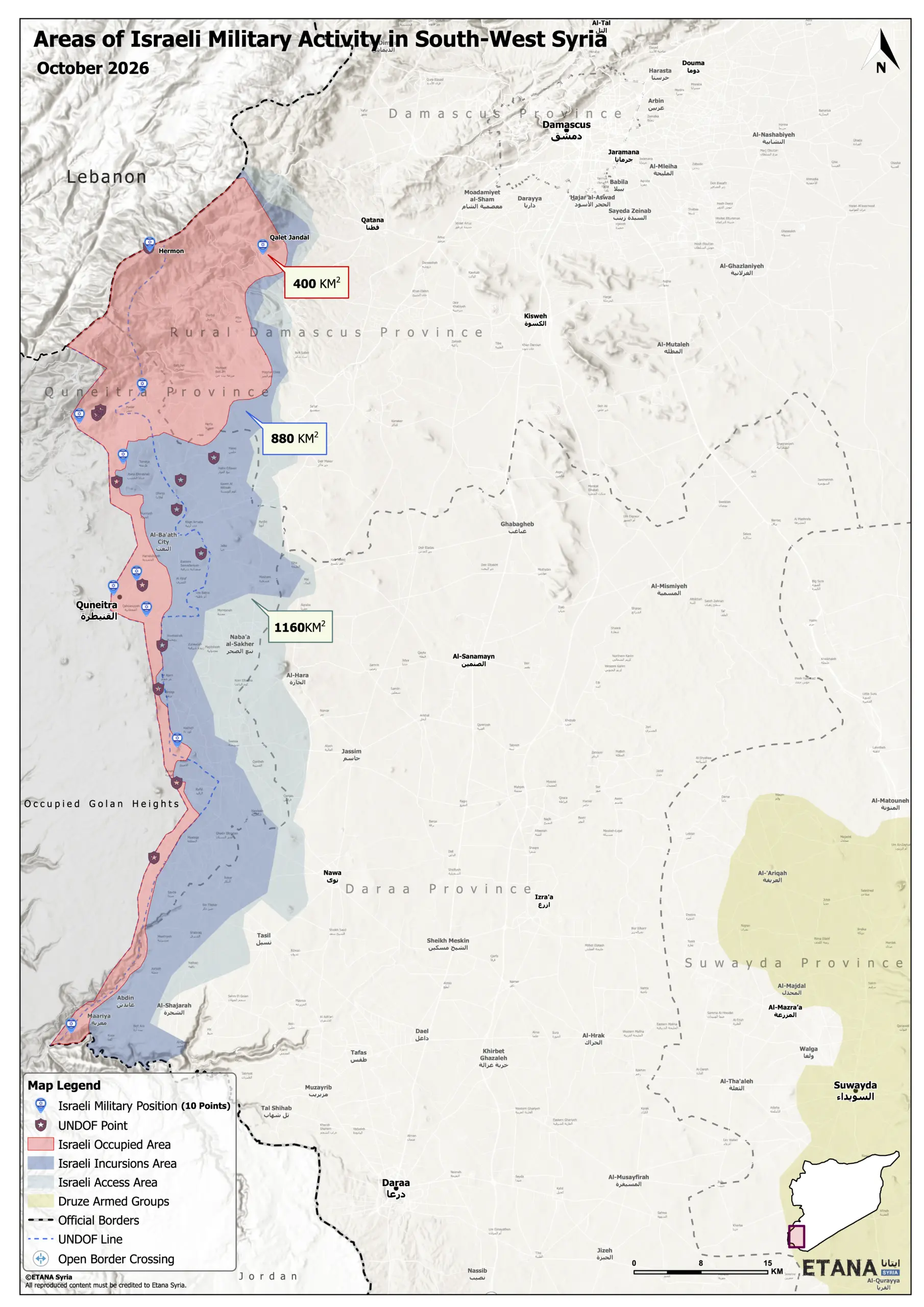
In part due to their location just east of the Israeli-occupied Golan Heights, Syria’s southern provinces have become the focus of Israel’s regional defensive posture—for nearly two years Syrians in the region have been subjected to regular ground incursions, raids and arrests by Israel. Over the last two years, Israeli forces have expanded their areas of operation and influence in an aggressive effort to demilitarize the border area with Syria. As a result, Israel has effectively established three areas of influence in south-west Syria: areas under full Israeli occupation and control, areas subject to Israeli incursions and areas accessed by Israeli forces.
Background
Israeli forces first reached Quneitra province in 1967 when they took control of the Golan Heights, which they still occupy today. In 1974, following the 1973 Yom Kippur War, Tel Aviv and Damascus agreed to establish a demilitarized area separating the Israeli-occupied Golan and Syrian-controlled Quneitra. As part of the agreement, the old city of Quneitra, destroyed by Israeli forces, was returned to Syria. The town was purposely not rebuilt by Hafez al-Assad as a visible reminder of Israel’s destruction.
Following the popular uprising against the Assad regime in 2011, Syrian opposition groups took control of Quneitra province. In 2013, Israel began providing limited medical support to residents there affected by the war, a policy that was formalized in 2016. The “Good Neighbor” policy was a means of deterring support for radical groups operating near the border areas by currying favor with local populations.
When the regime recaptured the south-west in 2018 from opposition forces, Hezbollah and other Iranian proxies proliferated into the area. From then until Assad’s fall in 2024, the south acted as Iran’s secondary frontline against Israel. Damascus also helped to facilitate Iran’s objectives in the region by hosting a sizable Iranian security presence and providing Tehran with the infrastructure needed to produce advanced weaponry, much of which was transported to Hezbollah in Lebanon. During this time, Hezbollah and the Assad regime’s 4th Division were also deeply involved in smuggling networks traversing the south. By 2023, ETANA estimated that Hezbollah alone managed 17% of all drug smuggling networks across Daraa and Suwayda provinces.
In 2022, Israel stepped up its efforts to counter Iran in the south, and midway through the year its forces passed the UNDOF line and entered Syrian territory. This point marks the beginning of the “Sufa 53” road project, where Israeli forces cleared the path for further surveillance across south-west Syria. These operations, which saw Israel bulldoze trees and construct observation points, saw no major reaction from the UN or international community. This activity only increased after the October 2023 Hamas attacks in southern Israel and the ensuing Israeli war and genocide in Gaza.
When the Assad regime collapsed just over a year later, Israel declared the 1974 agreement void and its forces again entered Quneitra province. In the nearly two years since, Israel has expanded its reach and operations in south Syria with the goal of securing its border areas and preventing further attacks. This activity has come at the expense of the post-Assad transition and the Syrians living in the south, who after more than a decade of war are being subjected to increasing Israeli military aggression.
Areas of Israeli occupation
Israel now directly occupies and controls approximately 400 square kilometers of territory in the 1974 demilitarized area including the highly strategic Mount Hermon/Jabal al-Sheikh peak, as well as in Syria proper including parts of Quneitra and rural Damascus; at its deepest, this area reaches 12km into Syrian territory. Control of Mount Hermon is strategically important for Israel: the mountaintop is the highest point in Syria and is well suited for surveillance over both south-west Syria and south-east Lebanon. Damascus is visible from its peak. In areas of Israeli control, Tel Aviv provides relief assistance to local residents and at times, specific services. In Hader, for example, the Israeli army operates a medical facility for local residents.
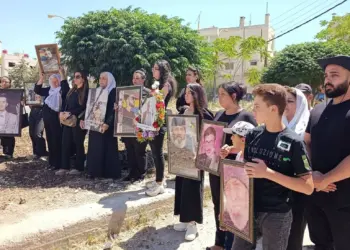
Israeli forces operate here with considerable freedom of movement and Tel Aviv has prohibited any personnel affiliated with Syria’s interim authorities from entering the area. Residents, meanwhile, are subject to regular Israeli ground operations and temporary checkpoints, at which men and boys may find themselves temporarily detained or, in some cases, transported across the border where they are held in Israeli prisons in long-term detention.
ETANA recorded a total of 310 arrests and/or detentions by Israeli forces between December 2024 and September 2026. Of these, 38 Syrians remain in Israeli custody. This includes at least two detainees under the age of 18. As recently as last month the UN Commission of Inquiry on Syria warned that the detention and transfer of Syrians into Israeli territory “may amount to war crimes.” Additionally, an estimated 50 Syrian minors were detained and subsequently released by Israeli forces. In all recorded cases, detainees were male.
Areas of Israeli incursions
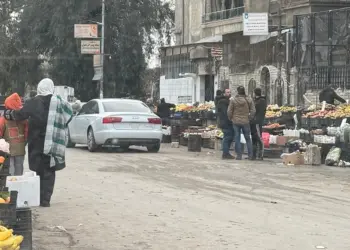
Extending beyond the areas of Israeli control are areas subject to frequent ground incursions by Israeli forces, including patrols through and raids on villages, the establishment of temporary checkpoints and/or arrests. This territory covers approximately 880 square kilometers of Syrian territory and encompasses all of Quneitra province. At their furthest point, these incursions extend up to an estimated 14km into Syrian territory, toward western rural Daraa. Syria’s interim authorities have a limited security presence within the Israeli incursions area. This presence is weakened by the ongoing Israeli incursions, which have reportedly prompted some Defense and Interior Ministry personnel to resign amid fears of further incursions or weapons confiscations by the Israelis.
In addition to expanding Israel’s surveillance capabilities across the south, these incursions areas contain vital water resources and agricultural land. This includes dams and reservoirs fed by Wadi al-Raqqad and extends southward to the Al-Wahda Dam. Any disruptions to water security here would be felt downstream in Jordan, as well as among local residents—many of whom rely on agriculture for their livelihoods. A joint investigation by Syrian Archive and Verify identified 22 incidents of Israeli activity related to dams in Quneitra province, including the destruction of the Northern Kudnah Well in the Al-Kashniyeh area and destruction of the pipeline connecting the Al-Asbah water station to the town of Kudnah.
Such incidents only amplify ongoing water stress. Last year the UN Food and Agriculture Organization (FAO) warned that a historic drought meant just an estimated 40% of Syrian farmland was cultivated, with conditions affecting almost 75% of Syria’s total cropped area. In January 2026, ETANA reported that Israeli paragliders spent several days spraying herbicides over farmlands west of Al-Rafid and Saida al-Jolan.
Areas of Israeli access
Beyond areas which see regular or semi-regular Israeli incursions are areas that Israeli forces have reached at least once since 8th December 2024. This wide area encompasses approximately 1,160 square kilometers of Syrian territory spanning Quneitra, Daraa and Rural Damascus provinces. Within this area, Israeli forces destroyed all military sites belonging to the former Assad regime, effectively eliminating any state-led defenses and preventing interim authorities from taking control of weapons stocks.
In some cases, Israeli military operations here have extended as far as around 50 kilometers into Syrian territory. At their furthest, Israeli forces have reached areas within around 27km of central Damascus and less than 9km from the capital’s outskirts. The Israeli access areas include several strategic hilltops, including Tal al-Jabiyeh, Tal al-Harrah and Tal al-Mal, which overlook the surrounding areas.
The Syrian response
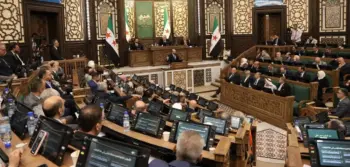
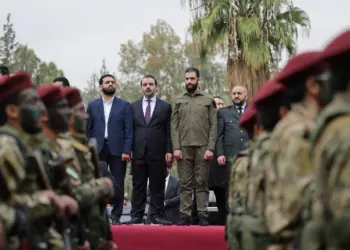
The Syrian response to Israel’s repeated violations in its territory has been limited. Authorities in Damascus, still in the process of managing a fragile transition, lack the capacity to effectively respond to Israel’s provocations. Starting mid-2025, US-mediated talks between Israel and Syria attempted to reach an agreement on deconfliction in the border area. As of October 2026, no such agreement has been reached.
Recent statements from Syrian officials suggest the talks may have collapsed entirely. On 18th August 2026, Israel carried out several airstrikes targeting the Abu Dhuhur Military Airport in the eastern Idlib countryside, an inactive site that could have served as a strategic airbase hub for Damascus. Subsequent US-mediated deconfliction talks appeared to have led nowhere. In the period after the attack, Syrian officials stepped up their public criticism of Israel’s activity in south Syria. Speaking at the UN General Assembly in New York in September 2026, interim President Ahmad al-Shara’a outright condemned Israel’s hostility in Syria and reiterated Syria’s commitment to the 1974 agreement.
At the local level, Syrians living in areas subject to an Israeli presence live under the threat of detention or arrest. Residents report widespread fear of renewed incursions or arrests. ETANA estimates that around 800 residents of Beit Jinn have been displaced amid fears of Israeli operations. Several families from the town of Al-Hamidiyeh, too, are displaced.
Conclusion
In the near future, Israel is unlikely to scale back its ground operations in south Syria without a security agreement with interim authorities in Damascus. The post-2023 Israeli defensive position in south Syria, which favors aggressive expansion in defiance of international law and the rights of citizens in affected areas, has been met with limited consequences from the international community. A weak Damascus, still managing its own fragile political transition, means Israel is largely defining the security landscape in Syria’s southern provinces. Recent data shows Tel Aviv expanding activity there, in a continued violation of the 1974 agreement (which Israel has abandoned) and to the detriment of local communities.