June was defined less by any single breakthrough but rather the uneven and occasionally contradictory signals emerging from the actors responsible for implementing north-east Syria’s military, civilian and economic integration. Formal military integration advanced through several concrete steps—including the establishment of four new brigades, an expanding training pipeline and Damascus’s stated expectation of a formal SDF dissolution by the end of 2026. However, unresolved ideological divisions, particularly over the future role of women within national armed structures, continue to threaten the completion of the process and cast doubt over efforts to portray the roadmap as approaching its final stages. Economic pressures, meanwhile, may pose an equally significant challenge to stability. Persistent fuel shortages generated near-daily protests across both Arab and Kurdish communities and created an unusual point of shared grievance against state authorities.
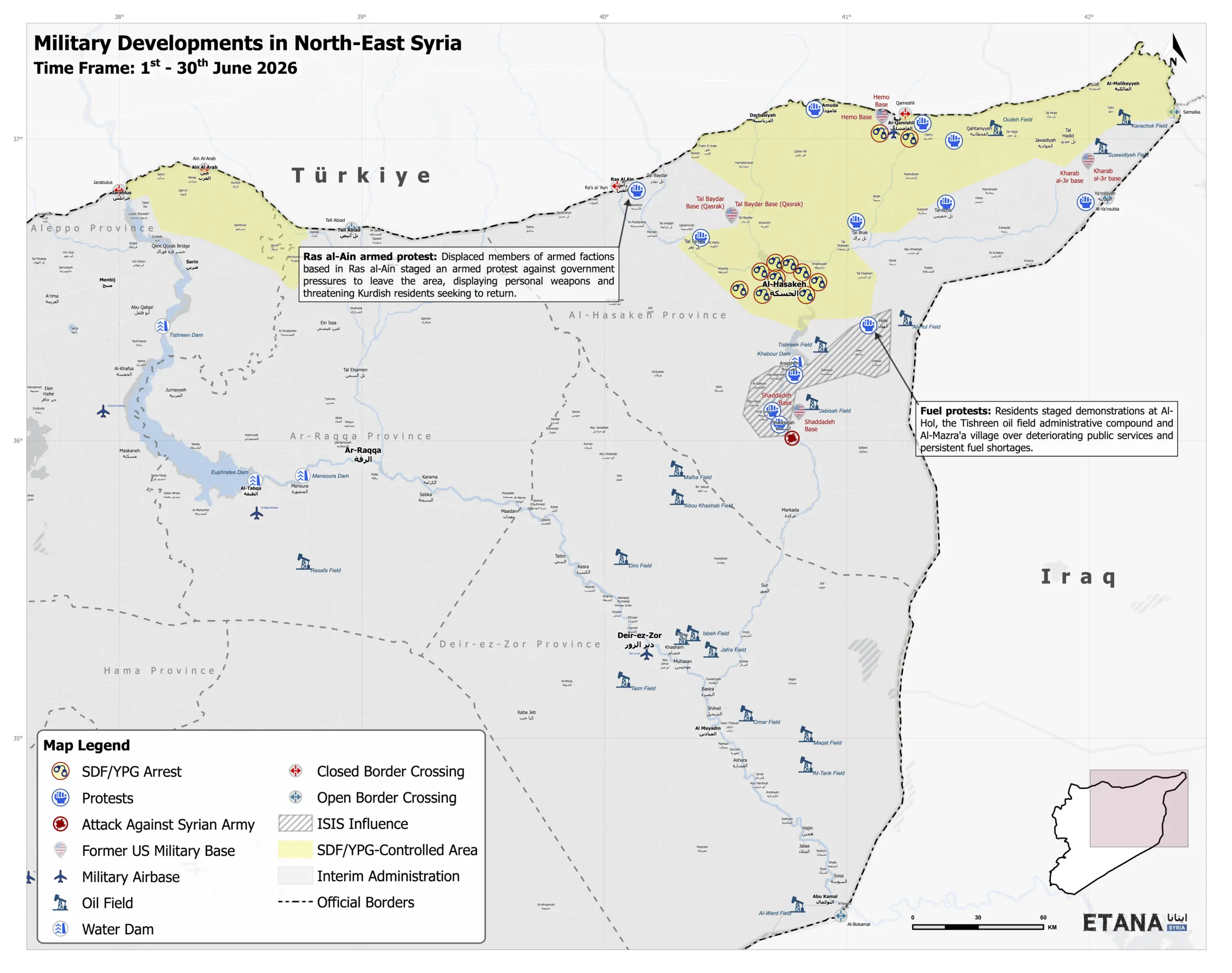
Damascus-SDF Security Integration
The gradual incorporation of the Syrian Democratic Forces (SDF) into national military structures continued to advance in recent weeks broadly in line with the existing implementation timetable. June witnessed some of the clearest operational steps in the merger process to date, with the Syrian army’s 60th Division beginning to absorb former SDF personnel and the establishment of four new brigades composed of former SDF fighters. Hasakeh’s deputy governor, Ahmad al-Hilali, also indicated that a formal government announcement dissolving the SDF outright is expected before the year’s end—suggesting Damascus now regards military integration as nearly, if not yet formally, complete.
Even so, negotiations surrounding the future status of the Women’s Protection Units (YPJ) remain among the most politically sensitive and ideologically contentious components of the broader merger process. The issue reflects the political and ideological gulf between interim authorities and the SDF over issues such as the involvement of women in security forces (and particularly military units). The process has proven particularly contentious for the YPJ: senior commander Rohlat Afrin publicly rejected proposals to confine female fighters to Asayish service, while a member of the presidential delegation countered that the Syrian army maintains no dedicated women’s combat units and that Kurdish women’s formations should instead be incorporated into Internal Security’s female branches.
Detainee exchanges have remained one of the least contentious aspects of negotiations between Damascus and the SDF, with June witnessing further incremental progress despite persistent irregularities. Al-Hilali announced the release of 28 female SDF fighters, bringing cumulative releases to more than 1,200, followed by roughly 50 additional SDF-affiliated detainees released from Aleppo later in the month.
Political & Humanitarian Developments
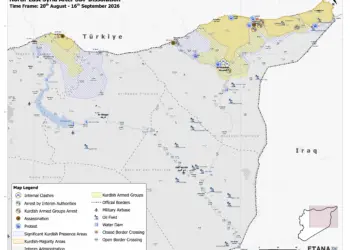
The visible return of Syrian state symbols across north-east Syria has generated occasional frictions. Asayish positions began raising the Syrian national flag alongside SDF flags for the first time since the January agreement, a practice later extended to Hasakeh Central Prison and other sites in the Ghuweiran district before reaching the Sabbagh Roundabout by the month’s end. However, SDF supporters removed several government flags erected along the Hasakeh-Qamishli highway, illustrating that symbolic integration remains only partially accepted at the grass-roots level even as senior officials publicly commit to the process.
The interim Ministry of Interior completed collection of citizenship applications from Syrian Kurds eligible under Legislative Decree No. 13, with interview centers subsequently announced across eight cities including Darbasiyeh, Hasakeh and Qamishli. In parallel, the Ministry of Education authorized students who studied under the Self Administration’s curriculum to sit national examinations during the 2025–26 and 2026–27 academic years, alongside plans to integrate approximately 38,000 teachers and confirmation that all governorate schools will transition to the national curriculum from the next academic year. Together, the measures represent some of the clearest indications to date that institutional integration is steadily expanding beyond the security sector into the wider administrative apparatus.
Arab-led demonstrations recurred in Al-Shaddadeh, Tal Burak and elsewhere, demanding relaxed recruitment criteria for government forces and reflecting a broader perception that Damascus’ engagement with the SDF has come at the expense of Arab political and economic interests in Hasakeh. Separately, a communal incident in Amouda, in which a Kurdish resident publicly insulted traditional Arab dress, triggered protests by Arab residents in several areas, most notably in Ras al-Ain. Al-Hilali acknowledged the underlying grievances as legitimate and announced relaxed educational and age requirements for Ministry of Interior recruitment, though perceptions of political imbalance appear to be deepening rather than receding.
Economic Developments
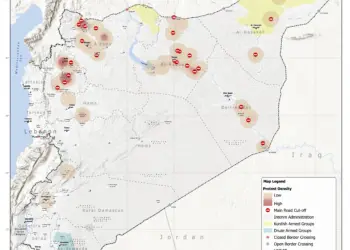
Diesel and gasoline scarcity generated near-continuous protests across Al-Hol, Tal Hamis, Debeil, Al-Haddadiyeh, Qamishli and other areas as the shortages and price shocks of the past few months have placed all segments of society under intense financial stress. The opening of government-priced fuel stations—at $1.10 per liter for gasoline and $0.88 per liter for diesel—did little to ease the strain, not least because these prices stand at several times the Self Administration’s subsidized rates. A revised subsidized pricing schedule was announced later in the month, though implementation remained pending at the time of reporting. Downstream effects included the suspension of privately run neighborhood generators, sharply rising transport costs (with bus fares between Hasakeh and Damascus increasing more than twofold before the end of the month), and a bakery strike over price controls tied to rising diesel costs.