Syria’s transition to date has been overwhelmingly defined by a stabilization-first approach, both by new Syrian authorities under interim President Ahmad al-Shara’a and international partner-states. This approach prioritizes consolidation of interim authorities’ position without sufficient incentivization for reparative, progressive reform, even despite repeated instances of serious violence and other concerning indications of authoritarian consolidation. While this emphasis on security and minimal progress benchmarks may generate short-term stability, it will not address the underlying causes for frustration, conflict and fragmentation within today’s Syria. This stabilization-centric approach is creating shortfalls. If authorities recalibrate their priorities with clear benchmarks for progress, they would be in a better position to support Syria’s long-term stability.
Background
The collapse of the Assad regime led to the declaration of a five-year transitional period under interim President Ahmad al-Shara’a, during which key transitional steps—such as government formation, a constitutional declaration, elections and national dialogue—would take place. Faced for many years with a malign regime that dragged Syria into a brutal 14-year conflict and actively destabilized the wider region, the international community has seen the new status quo in Syria as an important opportunity: to properly re-engage with a central Syrian government for the first time in decades and stabilize Syria in the process. Since then, however, international partner-states have appeared to prioritize stabilization of the new authority above all other considerations, willing to overlook repeated bouts of serious violence and a prevailing trend of authoritarian consolidation.
Current & Emerging Shortfalls
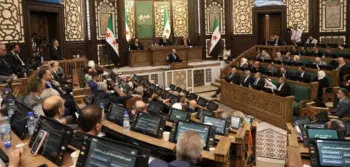
Since December 2024, Syria has witnessed a growing centralisation of power in the hands of the interim president with no meaningful checks. This is evidenced by the interim president holding legislative and executive authority, thereby effectively acting as both president and prime minister, and the growing influence of the Political Affairs Committee, which is supervised by presidential loyalists while operating under the umbrella of the Ministry of Foreign Affairs. This body, along with its branches across all governorates, is increasingly being used as a monitoring tool for authorities to control political and civil dynamics in the country—for instance, any public events cannot be held without the committee’s approval. A similar trend is observable in the reformation of the interim Ministry of Interior, which has threaded ministry personnel intrinsically into local governance structures.
Security sector reform
Security sector reform is essential in any post-conflict setting, but Syria’s trajectory raises serious concerns. The new authority is restructuring this sector to reflect one political and social background (loyalists) and not Syria’s diverse composition, in turn suggesting that security and military sectors are being redesigned to protect the authority and not the country. Within this context, the 2026 national budget shows that nearly one third of public expenditure is allocated to security and defence, exceeding allocations for public services. While policymakers can argue that this is necessary in a country emerging from 14 years of conflict and still beset by persistent security threats (such as ISIS), a key issue is that this budget channels financial resources to state security institutions with little consideration given to societal security. The social reconciliation that underpins societal stability can only be achieved through meaningful transitional justice mechanisms that reduce intercommunal conflict, violence and even radicalisation. Current efforts prioritize rebuilding state security institutions, often without addressing how those institutions are built, how they operate or to what end.
Institutional capture & elite bargaining
Key ministerial and civil service positions have been systematically filled by HTS loyalists, the majority of whom previously served in the Syrian Salvation Government in Idlib before the fall of the Assad regime. At the same time, many civil servants with long institutional experience, including individuals with no ties to regime-era crimes, have been dismissed, resulting in the loss of institutional memories and administrative continuity. The absence of coordinated investment in meaningful oversight and accountability processes by an independent civil society also effectively enable authoritarian elites to capture the state.
Several newly created bodies operate with full autonomy, reporting directly to the interim president or his inner circle without any legislative oversight. The Sovereign Fund is one example: headed by the interim president himself, it operates in direct contravention of internationally recognised Santiago Principles, which universally require transparency and independent oversight of sovereign wealth management. The Sovereign Fund is the primary institution currently awarding business contracts and it remains under the daily management of Abu Mariam, a controversial official in the wake of the seizure of Assad-era properties and “reconciliation” deals with Assad-era businessmen. Another example is the Land and Sea Ports Commission, which functions as an autonomous entity without any legislative scrutiny over its decisions and revenues.
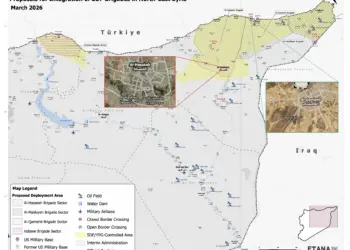
From Syria’s very first national dialogue and the conflict in Suwayda to the latest integration deal in Syria’s north-east, negotiations have been closed behind closed doors between elite armed groups with limited procedural transparency or detailed outcomes and implementation mechanisms. This transactional deal-making often produces short-term coordination but struggles to build legitimacy. In addition, al-Shara’a’s approach with national and local-level figures that interim authorities consider “spoilers” to their authority, has been to bring them closer to government in a bid to co-opt their constituencies. While this may work for authorities in the short-term, it does nothing to repair wartime divisions or break cycles of conflict in the longer term.
State-managed civil society
Syria’s civic and political space is tightening through state-managed civic actors rather than open political engagement. Pressure from the Political Affairs Committee means that most aspects of CSOs’ work require pre-approval from authorities, prompting increasing internalization of red lines by civic actors because of incidents of harassment and a growing sense of threat in operations. There is also no clear legislation protecting the role and space for CSOs. INGOs, meanwhile, are increasingly treating civil society as service-provider subcontractors—at times prioritizing CSOs that can service state institutions—rather than as oversight groups over state power. As such, the new state order is increasingly seen as imposed on society rather than negotiated with it. Limiting these means of negotiation and civic discourse will entrench faultlines within the Syrian body politic likely to erupt in the future.
Policy Considerations
Interim authorities are not expected to deal with the issues raised without some form of pressure from internal and external actors. In Damascus, authorities should integrate both stability and inclusion from the outset by reassessing key benchmarks for meaningful progress. This includes ensuring meaningful political inclusion, where diverse communal needs and interests meaningfully represented in decision-making, and supporting institutional legitimacy so that institutions command trust beyond identity and patronage networks. In the security space, this means ensuring that security institutions are supporting communities equally and neutrally. At the civic level, authorities should assess whether or not civic space, emerging and rebuilding after decades of state repression, can operate independently and safely.
Externally, Syria’s international partners and civil society must recognize that Syria is in the midst of an interim/transitional period and that its success will depend on progress towards genuine participation and inclusivity. States can play a positive role in the transition by supporting the independent role of grass-roots, home-grown civil society in monitoring authorities, advocating for a rights-based approach and encouraging the revival of independent and effective unions and syndicates. At the technical level, they can also prioritize supporting the governance and technical capacity of the current government, as improved and more effective performance within state institutions could gradually shift current pro-authoritarian dynamics towards more inclusive ones.
Assessment
The “stability” emerging in Syria is in fact extremely fragile. The current stabilization-first approach is perhaps understandable when considering the violent turmoil of the post-2011 conflict in Syria: new elites are rebuilding the state in their own image and international partner-states are willing to overlook negative developments in the name of stability. However, this approach is short-termist and short-sighted. If there is one shift needed, it is to rethink what the post-Assad transition is meant to achieve. If that is stability, even if it comes with the return of an authoritarian order, it is important to remember how costly this proved to Syria and the wider region once the post-2011 conflict actually broke out. If, however, the priority is “stabilisation prior to liberalisation” or “stabilisation now, politics later,” it is important to consider that the new political order is already being established under this narrow mode of stabilization—it is one that is increasingly authoritarian and to the detriment of a more stable, sustainable political order for the future.