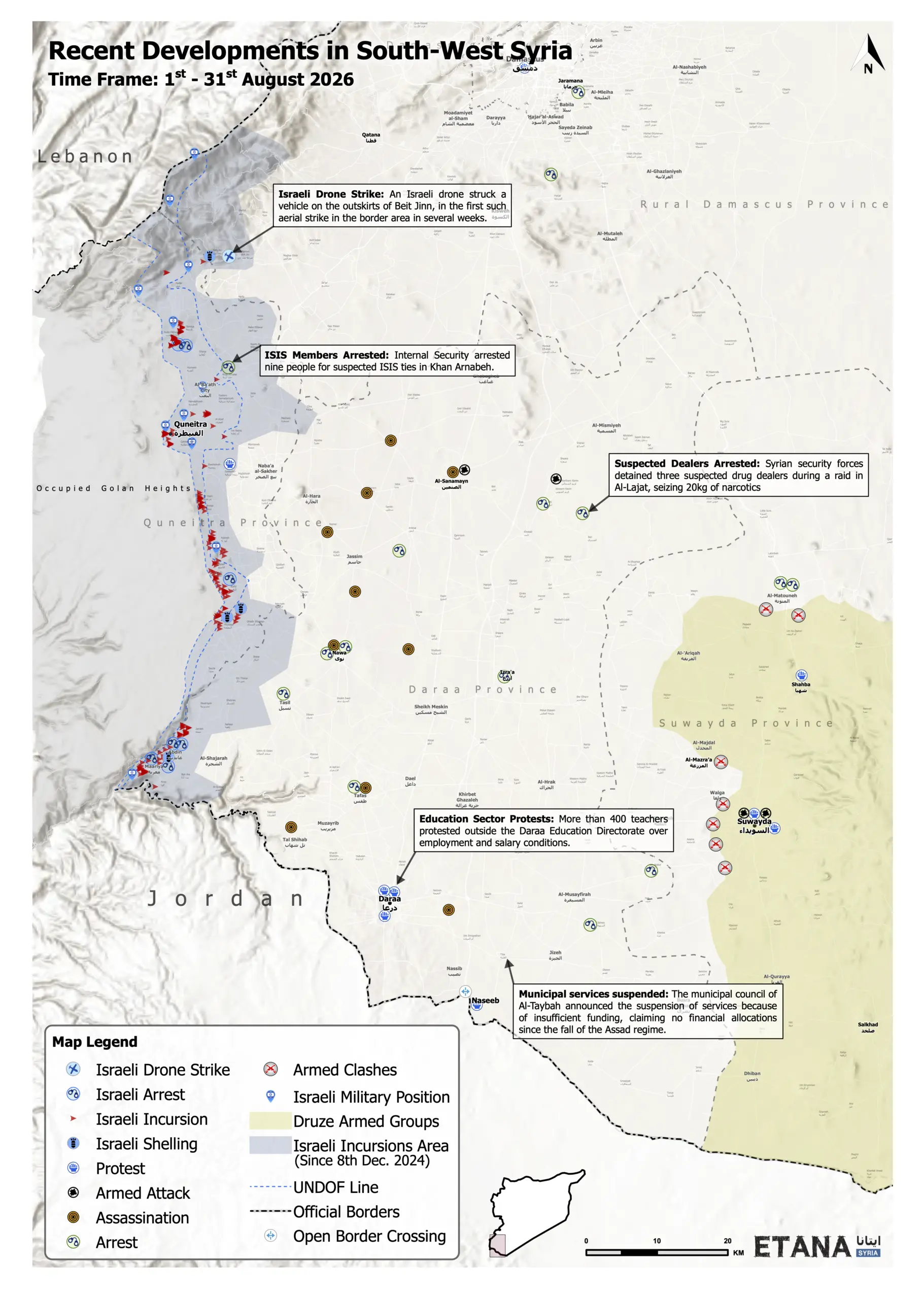
In addition to the threat of ongoing Israeli activity in the south, chronic underfunding and economic crisis have continued to erode all levels of state services across south-west Syria, with budgetary strain pushing some municipalities—such as Al-Taybah in Daraa province—to suspend services altogether. The crisis has been especially pronounced within the education sector, where deteriorating employment and salary conditions triggered sustained unrest in recent weeks: more than 400 teachers demonstrated outside Daraa’s Education Directorate over conditions affecting upward of 5,000 educators, threatening a strike ahead of the upcoming academic year. Without a substantive improvement in the underlying fiscal conditions, the erosion of municipal services and military cohesion alike is certain to deepen in the coming months, increasing incentives for corruption while undermining the public faith in these bodies at a time of extreme fragility.
Security Developments
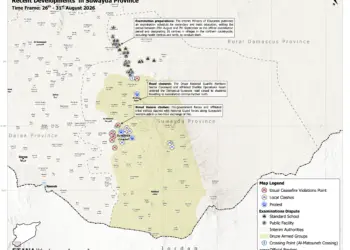
Internal Security and other security bodies conducted a sustained pace of raids and arrest operations over the month of August, targeting suspected militants, criminal networks and several individuals involved in local disputes. At least 17 separate raids took place in Najha, Khan Arnabeh, Al-Nada, Daraa City, Ibta’a, Al-Harah, Izra’a, Um Walad, Nawa, Tafas and Karim in Al-Lajat. Internal Security arrested nine suspected ISIS-affiliated individuals in Khan Arnabeh, including alleged cell leader Musa’ab Khalil al-Sheikh, also known as al-Sini (“the Chinese”).
Anti-smuggling operations also constituted a major component of security efforts, as authorities continued efforts to curb rampant drug trafficking and disrupt the movement of weapons by criminal networks. Security forces raided several towns in south-east Daraa, while a raid in Al-Lajat detained three suspected dealers and resulted in the seizure of 20kg of narcotics and several weapons.
Israeli Actions
Israeli forces continued to intermittently shell the western Daraa countryside and Quneitra border strip with artillery fire, striking Abidin, Kudnah, Tal Ahmar al-Gharbi, Jubata al-Khashab and Bat al-Warda. Israeli soldiers also fired weapons toward homes in Ma’ariyeh. In the month’s sole reported aerial strike, an Israeli drone targeted a vehicle near Beit Jinn, causing minor injuries and destroying the vehicle.
Israeli forces sustained a near-daily pattern of ground incursions across Quneitra and western Daraa, establishing temporary checkpoints and searching homes or agricultural areas. ETANA recorded operations in Jamleh, Ma’ariyeh, Koya, Al-Samadaniyeh, Taranjeh, Al-Rafid, Kudnah, the area west of Manatara Dam, Ba’ath City, Bureiqah, Jubata al-Khashab, Saida al-Jolan, Al-Mu’allaqah, Um al-Adham Dam, Abidin, Tal al-Karoum and Bat al-Warda. Israeli forces also repeatedly reopened roads west of Abidin and Ma’ariyeh after residents blocked them with stones.
Israeli forces conducted several short-term detentions during these incursions, this past month detaining at least 12 individuals. Israel released eight long-held Syrian detainees during August in what were described as recurring Wednesday releases, with most reportedly having spent roughly a year in custody. In early September, the UN Syria Commission of Inquiry on Syria warned that the pattern of detaining Syrians on Syrian territory, and in some cases transferring them to Israel, may amount to war crimes. The commission recorded 49 individuals, including two children, detained by Israel as of this month.
Israeli Prime Minister Benjamin Netanyahu, accompanied by Israel’s defense minister and the Israeli army’s deputy chief-of-staff, made a public visit to an IDF outpost on Mount Hermon.
Political & Humanitarian Developments
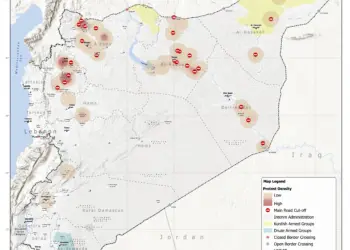
Protests surrounding the education sector have continued to destabilize the region with regular, explosive protests. More than 400 teachers demonstrated outside Daraa’s Education Directorate over employment and salary conditions affecting more than 5,000 teachers and threatened a strike for the 2026–27 academic year; another 500 teachers protested the dismissal of colleagues the following week. In Al-Taybah, the municipal council suspended services entirely, citing a lack of state funding since the fall of the former regime.